
Immigration Lawyer at Yonge & Eglinton, Midtown Toronto
Inna Kogan Immigration Law Firm is based at 120 Eglinton Avenue East, a short walk from Eglinton Station. Midtown renters, young professionals and families can meet a licensed lawyer here in person or by Zoom, for anything from a work permit extension to a Federal Court challenge.
Legally reviewed by Inna Kogan, BA, LL.B., MBA — licensed immigration lawyer, Law Society of Ontario · Last updated

Inna Kogan, a licensed lawyer and member of the Law Society of Ontario, practises immigration law from Suite 1100 at 120 Eglinton Avenue East, just east of Yonge Street. The firm can help midtown residents with work permit renewals, the move from a post-graduation work permit to permanent residence, spousal sponsorship, citizenship, and refusals or long delays that may call for the Federal Court. Meetings are by appointment, in person or by Zoom.
A law office in the middle of midtown
The firm’s Toronto office is in Suite 1100 at 120 Eglinton Avenue East, a few doors east of Yonge Street. It is a short walk from Eglinton Station, where Line 1 Yonge–University now meets Line 5 Eglinton, the Crosstown line that opened to the public in February 2026. People coming from Davisville, Mount Pleasant, Lawrence Park, Forest Hill or anywhere along the Eglinton corridor can reach us without heading downtown, and clients elsewhere in Ontario or overseas meet with Inna by video.
Yonge and Eglinton sits on the boundary between Ward 12 Toronto–St. Paul’s and Ward 8 Eglinton–Lawrence, with Ward 15 Don Valley West a few blocks north. Our address falls in Ward 12, Toronto–St. Paul’s, and the ward has changed quickly over the last decade. In the 2021 Census, 61.4% of Ward 12 households were renters, more than half of all dwellings were in buildings of five storeys or more, and one home in eight had been built in the five years before the census. About one resident in five was between 25 and 34 years old.
Common situations for midtown residents
Those figures point to the immigration questions a neighbourhood like this one tends to raise: graduates and skilled workers renting near the subway while they build Canadian experience, couples in which one partner is already a citizen or permanent resident, and settled homeowners now applying for citizenship or bringing parents to visit. Ward 12 counted 6,460 non-permanent residents in 2021, meaning people living here on work or study permits or as refugee claimants, and 35.4% of residents were immigrants. Among the ward’s recent immigrants, India was the most common place of birth.
- Post-graduation work permit holders planning the step to permanent residence
- Express Entry profiles in the Canadian Experience Class and Federal Skilled Worker Program
- Employer-specific and open work permits, extensions and maintained status
- Spousal and common-law sponsorship, from inside or outside Canada
- Citizenship applications, day counts and residency questionnaires
- Refused or long-delayed applications taken to the Federal Court of Canada
From a temporary permit to permanent residence
For many midtown renters the real question is not the next permit but the plan behind it. A post-graduation work permit generally cannot be extended, so the time it gives you has to be used well: a job that matches the National Occupational Classification (NOC) code you will claim, language results that are still valid when you apply, and skilled Canadian experience counted correctly from the right start date. We map those dates first, then decide whether the stronger route is Express Entry, a provincial nomination with an employer’s support, or another program.
Ontario rebuilt its nominee program this year. On June 25, 2026 the province closed its previous OINP streams, including the Human Capital Priorities and Masters Graduate streams that many midtown graduates had been counting on, and replaced them with a single employer-led Ontario Workforce Priority stream. If an older OINP plan is part of your strategy, it is worth having it reviewed against the current rules before you spend money on tests and assessments.
If your permit is close to expiring, applying for an extension before the expiry date lets you keep working or studying under the same conditions while IRCC decides, which IRCC calls maintained status. Missing that date can leave you without status and is entirely avoidable, so diarize it well ahead.
Spousal sponsorship for midtown couples
Midtown’s towers are full of couples building a life across two passports. A spousal or common-law sponsorship turns on two questions: is the relationship genuine, and does the evidence prove it. Common-law partners must show at least twelve months of living together, which leases, shared bills and the same address on government records can establish. Married couples need proof of the marriage and of the relationship behind it, from photos and travel to messages and family involvement.
We prepare the application so the documents answer an officer’s questions before they are asked, and we explain the practical differences between applying from inside Canada and from abroad, including the work options for a partner who is already here while the file is processed. If an officer later raises concerns, we respond to the procedural fairness letter in detail rather than letting the file drift toward a refusal.
Refusals, delays and the Federal Court
Because the firm is led by a lawyer, a refusal or a stalled file does not have to end with starting again. A refusal can be challenged by an application for leave and judicial review at the Federal Court of Canada, and an application that has sat well beyond IRCC’s normal processing time can be the subject of a Mandamus application asking the Court to order a decision. The deadlines are short: generally 15 days after you learn of a decision made in Canada, and 60 days for a matter arising outside Canada.
Midtown is also a practical base for the hearings and court dates that can follow. The Immigration and Refugee Board’s Central Region office, which hears refugee claims and appeals, is at 25 St. Clair Avenue East, a few stops south on Line 1. The Federal Court’s Toronto registry is at 180 Queen Street West. We prepare clients for both settings and explain each step in plain language before the day arrives.
Refugee claimants and hearings at St. Clair
Refugee claims in the Toronto region are heard by the Immigration and Refugee Board’s Refugee Protection Division, whose Central Region office is at 25 St. Clair Avenue East, two stops south of Eglinton on Line 1. A claim is won or lost largely on the Basis of Claim form and the evidence behind it, so the written account has to be complete, consistent and supported by documents from the start. Inconsistencies between the form, earlier statements to officers and testimony at the hearing are among the most common reasons claims fail.
Bill C-12 (Royal Assent March 26, 2026) added new grounds that make some refugee claims ineligible, and further changes to how claims are received and referred took effect on November 3, 2026, so anyone considering a claim should get advice before filing. Legal Aid Ontario may pay for a lawyer for eligible refugee claimants. Where a claim is refused, there may be an appeal to the Refugee Appeal Division or an application to the Federal Court, and a 12-month bar then limits humanitarian and compassionate applications in most cases.
Practical points for newcomers in midtown
A few local details save time. Ontario no longer applies a waiting period for OHIP, and people who hold a work permit and work full time for six months or more can qualify, so apply at ServiceOntario as soon as you are eligible. IRCC’s Toronto-area offices in Scarborough and Etobicoke see clients by appointment only, so do not plan to walk in with a question. And keep every lease, pay stub and tax return in one place. A future citizenship application needs 1,095 days of physical presence in Canada in the five years before you apply, and renters who move often find those records much harder to rebuild years later.
Meeting with Inna Kogan at Yonge & Eglinton
Consultations are by appointment. Send your details through the form on this page or call +1 416-322-2914, and the office will email a short questionnaire so Inna can review your situation before you meet. You can come to 120 Eglinton Avenue East, Suite 1100, or meet by Zoom. You will leave with a clear explanation of your options, the realistic risks of each, and what the next step involves. The firm serves clients in English, Ukrainian, Russian, Hebrew and Farsi.
Official sources
Government and court pages referenced on this page:
- Metrolinx: Line 5 Eglinton (Eglinton Crosstown LRT)
- City of Toronto: 2021 Census profile, Ward 12 Toronto–St. Paul’s (PDF)
- Immigration and Refugee Board: Central Region office
- Courts Administration Service: Federal Court registry offices
- Government of Ontario: Apply for OHIP and get a health card
- IRCC: Offices in Canada (appointment only)
- Legal Aid Ontario: Help with immigration or refugee problems
This page is general information, not legal advice. Rules and processing times change; for advice on your own situation, book a consultation with Inna Kogan.
Nearby areas we serve
- Immigration lawyer in North York
- Immigration lawyer in Willowdale
- Immigration lawyer in Etobicoke
- Immigration lawyer in Scarborough
- Immigration lawyer in Toronto
Questions about your file? Call +1 416-322-2914 or request a consultation.
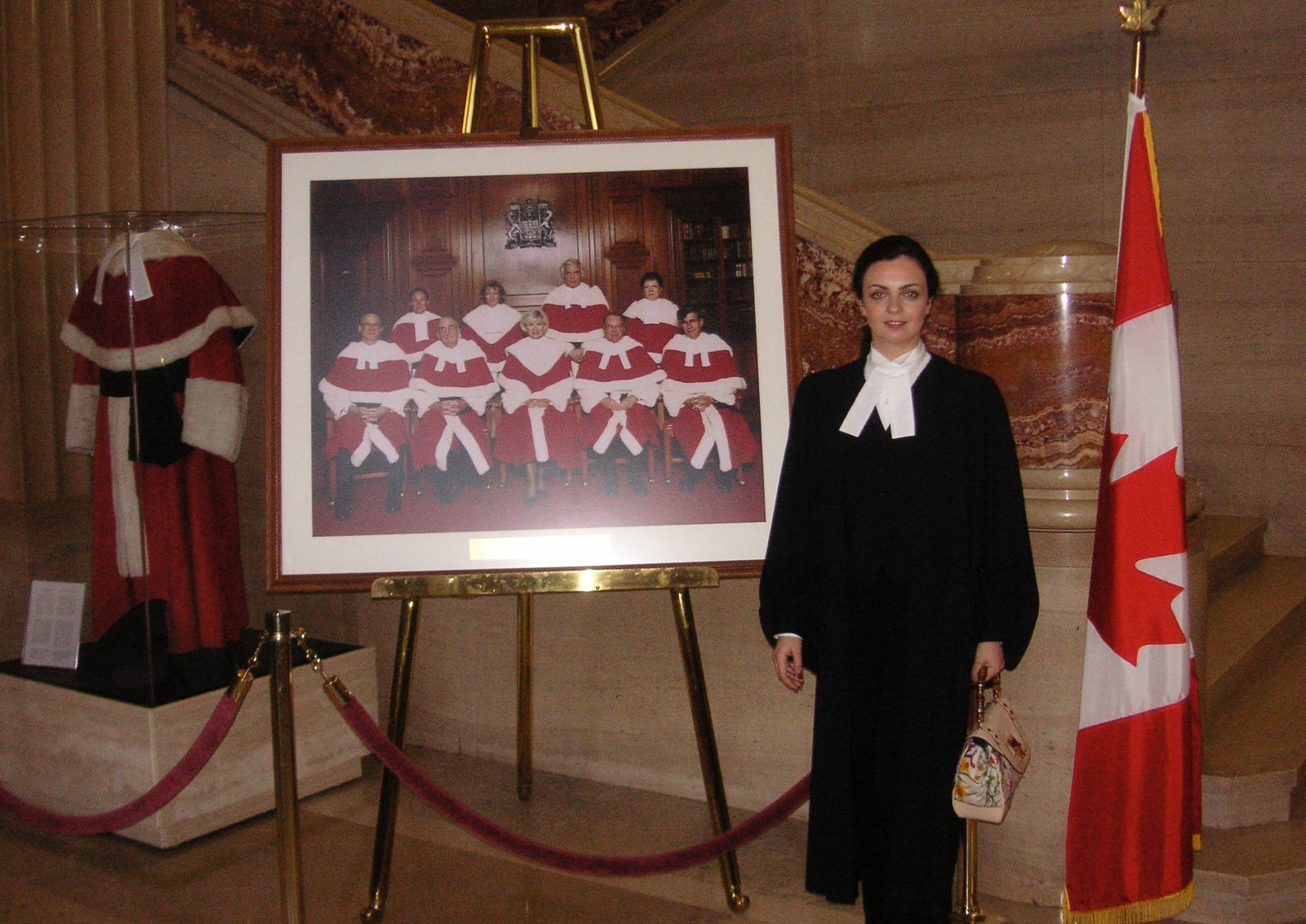
We go to court
A refusal is not always the end. Inna Kogan challenges unreasonable visa refusals and long delays at the Federal Court of Canada.
Appeal a refusal


Three simple steps to your consultation
Request a consultation
Fill out the form on this page and leave your contact details.
Receive your questionnaire
I email you a short questionnaire — please check your spam folder too.
Confirm your Zoom
You receive an invitation to meet Inna online. Confirm it, and we begin.
Immigration lawyer at Yonge & Eglinton: FAQs
Where exactly is your midtown office?
Suite 1100, 120 Eglinton Avenue East, Toronto, ON M4P 1E2, just east of Yonge Street. Eglinton Station, served by Line 1 and Line 5, is a short walk away. Meetings are by appointment, in person or by Zoom.
Can I extend my post-graduation work permit while I wait for permanent residence?
In most cases a post-graduation work permit cannot be extended, which is why planning early matters. Depending on your situation there may be other options, such as an employer-specific work permit or, for some permanent residence applicants, a bridging open work permit. We review your dates and eligibility before your permit runs out.
Do you help couples in midtown with spousal sponsorship?
Yes. We prepare spousal and common-law sponsorships, advise on applying from inside or outside Canada, and answer procedural fairness letters when an officer has doubts about the relationship. Common-law partners need to show at least twelve months of living together.
IRCC refused my application or has not decided it. What can I do?
A refusal can often be challenged by judicial review at the Federal Court of Canada, generally within 15 days of learning of a decision made in Canada or 60 days for one made abroad. A file delayed well beyond normal processing times may support a Mandamus application. Contact us as soon as you receive a decision so the deadline does not pass.
Can you represent me at the Federal Court?
Yes. Inna Kogan is a licensed lawyer, and the Federal Court’s rules require a party who is not acting for themselves to be represented by a lawyer. That matters when a refusal needs to be challenged or a delay needs a Mandamus application.
Book a personal consultation with Inna
Leave your details and I will send you a questionnaire and a Zoom invitation.
Book a personal consultation with Inna
Leave your details and I will send you a questionnaire and a Zoom invitation.
Ready to move forward?
Book a personal consultation with Inna and get a clear, honest assessment of your case.
Book a Consultation